
English▾


The global manufacturing industry is entering another period of adjustment.
Over the past few years, manufacturers have had to deal with supply chain disruptions, changing tariffs, geopolitical uncertainty, rising labor costs, fluctuating raw material prices, and growing pressure to shorten production cycles.
In 2026, these factors are having a direct impact on how companies source custom metal parts.
For buyers looking for sheet metal parts, CNC machined components, stamped parts, die-cast components, welded assemblies, or custom metal enclosures, supplier selection is no longer simply about finding the lowest quotation.
Lead time, engineering capability, production flexibility, quality consistency, and supply chain stability are becoming just as important as price.
For custom metal fabrication manufacturers, this shift is creating both challenges and new opportunities.
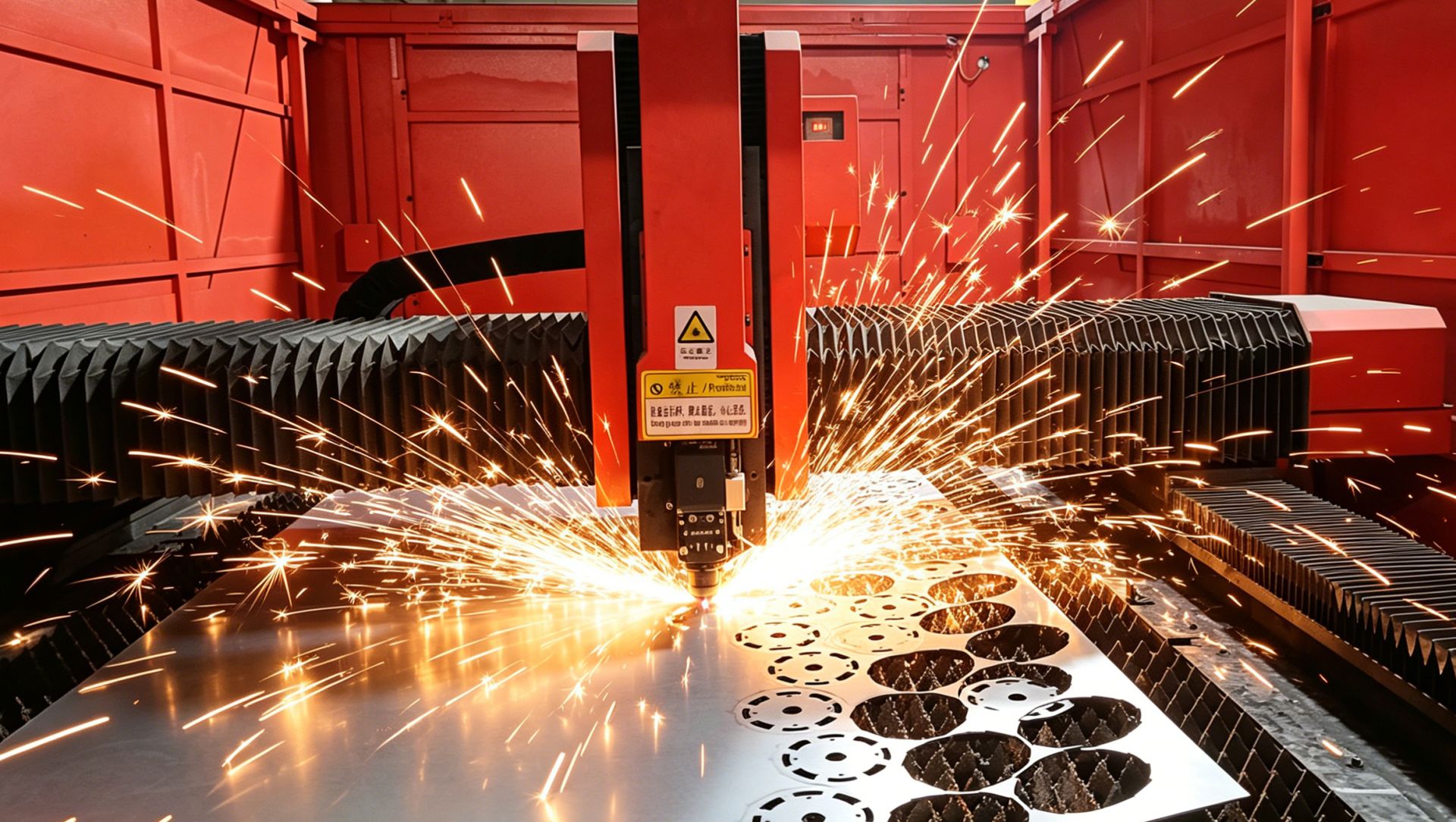
For decades, global sourcing was largely driven by one question:
Where can we manufacture this product at the lowest cost?
Cost is still important, of course. But today's purchasing teams are increasingly looking at the total cost and risk associated with a supplier.
A low unit price does not necessarily mean a low overall cost.
If a supplier cannot maintain material availability, if production takes longer than expected, or if inconsistent quality results in rework and delayed assembly, the original price advantage can quickly disappear.
This is why manufacturers are paying more attention to factors such as:
Lead time
Material availability
Minimum order quantity
Quality consistency
Engineering support
Production flexibility
Communication efficiency
Supply chain reliability
This shift is particularly relevant to custom metal fabrication, where every project may have different drawings, materials, tolerances, quantities, and finishing requirements.
For international B2B buyers, a reliable supplier is increasingly viewed as part of the manufacturing team rather than simply another vendor.
Many industrial products go through:
Design → Prototype → Testing → Modification → Small-Batch Production → Mass Production
During this process, dimensions can change, mounting holes may be added, materials may be adjusted, or the production process may need to be optimized.
This is common in industries such as industrial equipment, automation, electronics, telecommunications, energy equipment, and data center infrastructure.
A metal enclosure may require a revised cutout.
A sheet metal bracket may need a different bend angle.
A CNC machined component may need a tighter tolerance.
A shielding cover may need to be redesigned around internal electronic components.
For this reason, manufacturers increasingly need suppliers that can respond to engineering changes without creating unnecessary delays.
This is where an integrated metal manufacturing supplier can provide a real advantage.
A single project may require several processes, including:
Sheet metal fabrication
CNC precision machining
Metal stamping
Die casting
Welding
Surface finishing
Assembly
Managing all these processes through multiple independent suppliers can create additional communication and quality-control challenges.
A supplier capable of coordinating several processes can simplify the purchasing process and make it easier to maintain consistency across different components.
This is one of the areas where Dongguan Rongzhou Precision Hardware Products Co., Ltd. has developed its manufacturing capabilities.
With 16 years of experience in precision hardware manufacturing, Rongzhou provides integrated services covering sheet metal fabrication, metal stamping, die casting, welding, and CNC precision machining.
For customers with projects involving multiple types of metal components, this integrated approach can reduce unnecessary outsourcing and make communication more straightforward.
Having advanced machinery is important.
But for custom manufacturing, equipment alone does not solve every production problem.
A drawing may look straightforward on paper while creating practical manufacturing challenges.
For example:
Is the selected material suitable?
Is the specified tolerance reasonable?
Will the bending sequence cause interference?
Could welding create excessive deformation?
Is CNC machining the most economical process?
Would stamping be more suitable for a larger production volume?
Can the part be redesigned to reduce material waste?
These questions are part of the Design for Manufacturing (DFM) process.
An experienced engineering team can identify potential issues before production begins, helping customers avoid unnecessary modifications, delays, and rework.
For international buyers, this capability can be especially valuable because manufacturing communication often takes place remotely.
Instead of simply accepting a drawing and starting production, a capable supplier should be able to review the design, identify potential manufacturing issues, and communicate practical solutions.
At Rongzhou, engineering teams can evaluate customer drawings and samples before production and work with customers on manufacturing feasibility and structural challenges.
This is particularly useful for customized equipment structures, brackets, panels, housings, enclosures, and precision metal components.
Automation is another major topic in manufacturing in 2026.
CNC automation, robotic welding, automated material handling, machine vision, and digital production management are becoming increasingly common.
The purpose is not simply to make machines faster.
Automation can help manufacturers improve production consistency, reduce repetitive manual work, and better manage larger production volumes.
However, custom manufacturing is different from standardized mass production.
Many custom metal projects involve relatively small or medium production quantities combined with highly specific requirements.
A batch may contain only a few dozen CNC components.
Another project may require several hundred sheet metal brackets in different configurations.
Another may combine stamped parts, welded assemblies, and CNC-machined components.
In these situations, engineering experience remains extremely important.
The most effective manufacturing model is therefore not simply:
More Automation = Better Manufacturing
Instead, it is:
Engineering Experience + Manufacturing Technology + Automation + Quality Control
The combination of these capabilities allows manufacturers to maintain flexibility while improving production efficiency.
Metal manufacturers cannot separate production costs from raw material markets.
Steel, aluminum, stainless steel, copper, and other metals can have a significant impact on the final quotation.
Copper in particular has received considerable attention as demand continues to grow from power infrastructure, electric vehicles, data centers, and other applications.
For buyers, fluctuating material prices highlight another important issue:
Material management is part of manufacturing competitiveness.
A capable supplier should not simply purchase whatever material is easiest to obtain.
Instead, manufacturers need to consider:
Material availability
Material specifications
Material utilization
Production volume
Project schedule
Alternative materials where appropriate
For sheet metal parts, for example, efficient nesting can reduce material waste.
For CNC machining, appropriate material selection and machining strategy can have a significant effect on cycle time and overall cost.
For welded structures, choosing suitable material thickness and welding methods can help reduce deformation and unnecessary processing.
This is another reason why early engineering communication can make a difference.
One of the major manufacturing trends to watch is the growing focus on regional supply chains.
The United States, Europe, and other industrial markets are increasingly discussing domestic manufacturing capacity, supply chain resilience, and reduced dependence on individual sourcing regions.
However, global sourcing is unlikely to disappear.
Instead, many manufacturers are likely to adopt a more diversified approach:
Global Sourcing + Regional Supply Chain
Companies may continue working with overseas manufacturers while adding regional suppliers, local inventory, or multiple sourcing locations to reduce risk.
For international metal fabrication suppliers, this creates a more demanding but also more interesting market.
Customers still want competitive manufacturing costs.
At the same time, they increasingly expect:
Stable quality
Predictable lead times
Engineering communication
Flexible production quantities
Reliable packaging
Export experience
Clear documentation
For a manufacturer serving international B2B customers, the ability to communicate effectively throughout the entire production process is becoming an important part of the product itself.
A modern manufacturing project may involve many different metal components.
Consider an industrial equipment enclosure.
The project could require:
Sheet metal panels
CNC-machined mounting components
Stamped brackets
Die-cast components
Welded frames
Hardware installation
Surface finishing
Final assembly
If every component is sourced from a different supplier, the buyer needs to coordinate multiple quotations, production schedules, quality standards, packaging requirements, and delivery dates.
This increases the management workload.
An integrated manufacturing supplier can simplify part of this process by coordinating multiple manufacturing methods within one supply chain.
For buyers, the potential benefits include:
Fewer supplier interfaces + simpler communication + better process coordination + easier quality management
This does not mean that one supplier must manufacture every possible component.
Rather, it means that having multiple core capabilities under one manufacturing system can make complex projects easier to manage.
At Dongguan Rongzhou Precision Hardware Products Co., Ltd., our approach is based on a simple idea:
Custom manufacturing should solve the customer's production problem, not just process the customer's drawing.
With 16 years of precision hardware manufacturing experience, Rongzhou provides a range of manufacturing processes under one service system:
Sheet Metal Fabrication
Metal Stamping
Die Casting
Welding
CNC Precision Machining
We work with customer drawings and samples and support projects ranging from prototype and low-volume production to larger-volume manufacturing.
This flexibility is important because not every customer project follows the same production path.
A project may start with a prototype enclosure and later move into volume production.
A CNC component may need to be redesigned after testing.
A sheet metal bracket may need to be optimized for mass production.
A welded assembly may require structural adjustments before final production.
Our engineering team can participate in these discussions before manufacturing begins, helping identify potential production issues and practical solutions.
Consistency is another key consideration for international customers.
Rongzhou uses multiple inspection stages during production, with dimensional inspection for CNC-machined components and inspection procedures appropriate to different manufacturing processes.
Inspection documentation can also be provided according to customer requirements.
The objective is straightforward:
The parts delivered today should meet the same requirements as the parts delivered in the next batch.
For overseas customers, manufacturing is only part of the process.
Drawing communication, quotation, production updates, packaging, and shipment coordination all affect the overall purchasing experience.
Rongzhou has experience working with international B2B orders and supports customers with customized metal parts such as equipment brackets, metal enclosures, panels, structural components, and other hardware products.
As the manufacturing landscape becomes more complicated, buyers may want to evaluate suppliers using a broader set of criteria.
Instead of asking only:
“How much does this part cost?”
Consider asking:
A supplier should be able to identify manufacturing challenges rather than simply quote the drawing.
If a project requires sheet metal, CNC machining, stamping, die casting, and welding, integrated production capabilities can simplify supplier management.
A supplier that can support both prototyping and volume production can make it easier to move from product development into manufacturing.
For B2B manufacturing, consistency between batches is often more important than achieving the lowest price on the first order.
Clear communication about drawings, materials, tolerances, production schedules, packaging, and delivery can prevent many avoidable problems.
Product development rarely follows a perfectly straight path. Manufacturing flexibility is therefore an important part of supplier selection.
Global manufacturing is not moving toward a single model.
Some production will become more regional. Some will remain global. Automation will continue to expand, while engineering expertise will remain important. Raw material markets will continue to influence manufacturing costs.
What is changing is the way companies evaluate their manufacturing partners.
Price still matters. But price alone is no longer enough.
For custom metal components, buyers increasingly need suppliers that can combine:
Engineering capability + manufacturing expertise + multiple processes + quality control + production flexibility + reliable delivery.
This is the direction in which custom metal fabrication is evolving.
With 16 years of experience and capabilities covering sheet metal fabrication, metal stamping, die casting, welding, and CNC precision machining, Dongguan Rongzhou Precision Hardware Products Co., Ltd. continues to support international B2B customers with customized metal components and equipment structures.
From prototypes and low-volume orders to larger production runs, the goal is not simply to manufacture a part.
It is to help customers turn a drawing into a reliable, production-ready component.
If you are sourcing custom sheet metal parts, CNC machined components, stamped parts, die-cast components, welded assemblies, or custom metal enclosures, Rongzhou welcomes drawing and project inquiries.